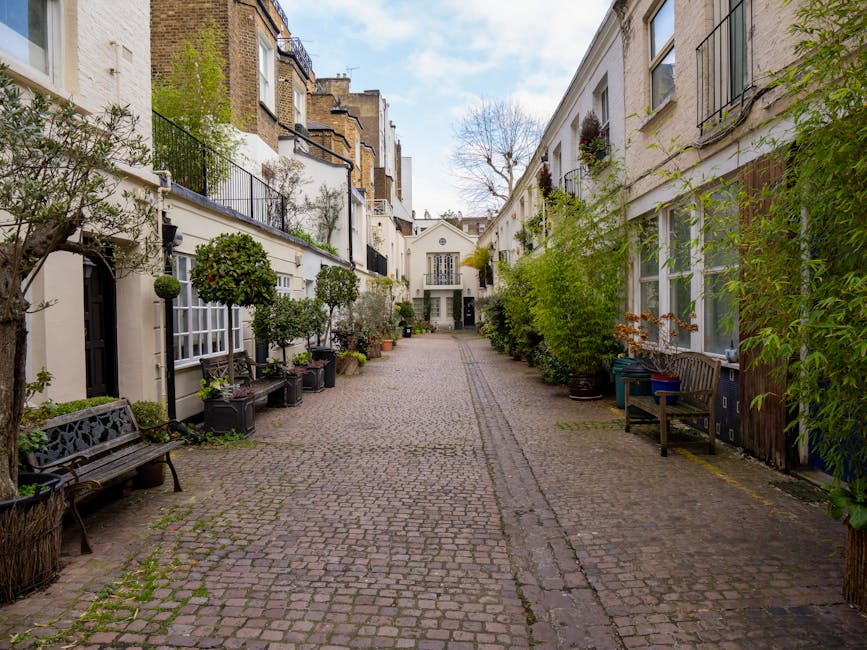
Access problems at Euston mews and gardener solutions

If you have ever tried to move tools, compost bags, a mower, or even a simple wheelbarrow down a narrow mews passage, you already know the feeling: one awkward turn, one low wall, one locked gate, and the whole job slows to a crawl. Access problems at Euston mews and gardener solutions are not just a convenience issue; they shape what can realistically be maintained, repaired, or redesigned in a compact London garden. In a place like Euston, where many homes and shared spaces are tucked behind buildings or reached through tight side routes, a good gardener has to think beyond planting and pruning. They have to think about movement, storage, neighbours, safety, and how to work neatly without turning the place upside down. This guide breaks down the real challenges and the most practical solutions, step by step.
- Why access problems matter
- How gardener solutions work
- Key benefits and practical advantages
- Who this is for
- Step-by-step guidance
- Expert tips for better results
- Common mistakes to avoid
- Tools, resources and recommendations
- Law, compliance and best practice
- Options and comparison
- Real-world example
- Practical checklist
- Conclusion
- Frequently asked questions
Why Access problems at Euston mews and gardener solutions Matters
Access problems sound minor until work begins. Then they become the main event. In mews streets and courtyard gardens, the route in and out can be narrower than the garden itself, and that changes everything about how the job gets done.
The first issue is efficiency. If a gardener cannot get equipment close to the work area, every task takes longer. A hedge trim becomes a careful carrying exercise. A clearance job becomes repeated trips through a tight doorway. A lawn cut may be simple in theory but fiddly in practice if the mower has to be lifted up steps or threaded through bins, bikes, or parked cars. That extra effort often shows up in the schedule, the cost, and the finish quality.
The second issue is safety. Tight access raises the chance of trips, scrapes, dropped tools, and accidental damage to walls, fencing, glass, paving, or plant containers. To be fair, even a skilled person can have a bad day in a cramped passage with poor light and a muddy surface. The environment matters.
There is also the neighbour factor. Euston mews properties often sit close together, so noise, dust, and blocking shared access can create tension quickly. A sensible gardener will plan around those pressures, keep things tidy, and leave pathways usable where possible. That is not just polite; it is part of professional working practice.
For homeowners, landlords, and managing agents, this matters because access shapes maintenance consistency. If getting into the garden feels like a small ordeal every time, jobs get delayed. Then the problems stack up: overgrown hedges, invasive weeds, blocked drains, slippery paving, and plants that are surviving rather than thriving. The sooner access is thought through, the easier the whole garden becomes to manage.
Expert summary: the best solution is rarely one dramatic change. In most mews gardens, access improves through a mix of smarter storage, better route planning, lighter tools, and garden design that respects the space you actually have.
If you are planning wider improvements, it can help to think of access as part of the whole garden system, not an afterthought. Services such as the full range of gardening services and practical landscaping often work best when the layout supports the way the garden will be used day to day.
How Access problems at Euston mews and gardener solutions Works
Good access planning starts with observation. Not the glamorous bit, admittedly, but it is the useful bit. Before lifting anything, a gardener should walk the route, check widths, identify gates, steps, turns, surface changes, and note where equipment can be stored temporarily without blocking the path.
In simple terms, the job is broken into three questions:
- How do we get in safely?
- How do we work without damaging anything?
- How do we get waste and equipment back out efficiently?
Once those questions are answered, the solution becomes much clearer. Sometimes the answer is light equipment and hand tools only. Sometimes it means smaller quantities of waste removed in stages. Sometimes the route itself needs small improvements, such as clearer gate openings, better lighting, or reshaped planting beds that stop the space feeling cramped.
There is often a practical distinction between access for people and access for equipment. A person may fit through a gate comfortably while a mower, hedge trimmer case, or bag of green waste does not. That distinction seems obvious, yet it is easy to forget until the work starts. A good gardener thinks about both.
The gardener may also change the method of work. For example, rather than moving a large pile of cuttings in one go, they might do sectional clearance. Rather than using a heavy mower, they may use a compact electric tool. Rather than dragging materials over delicate paving, they may use protective sheets or carry items by a safer route. Small things. But they add up.
In many Euston mews settings, the aim is not to force the space to behave like a suburban garden. It is to work with the access that exists and make it feel less awkward over time. That is where experience counts.
Key Benefits and Practical Advantages
When access issues are handled well, the benefits are felt almost immediately. The garden becomes easier to maintain, the work is less disruptive, and the result tends to look cleaner because the process is cleaner. Simple as that.
- Faster garden work: less time spent wrestling with gates, corners, and awkward carrying routes.
- Reduced risk of damage: fewer knocks to walls, pots, paving, and planting edges.
- Better finish quality: tidy routes and smarter planning often mean more careful, consistent results.
- Lower stress for residents: fewer surprises, less clutter, less noise, and less disruption.
- Improved safety: reduced trip hazards, safer lifting, and more controlled movement.
- Better long-term maintenance: once access works, regular upkeep is much more realistic.
There is also a commercial advantage if you are a landlord or property manager. Access-friendly gardens are easier to schedule and cheaper to keep in good condition over the year. A compact London courtyard can look expensive and well-kept, but only if it is being maintained regularly. If access is awkward, that regular care tends to slip.
For some properties, access improvements also support better garden design. A layout that leaves a cleaner route to the shed, bin store, or rear boundary can save an enormous amount of time. It sounds small. It really does. Yet these small efficiencies are what make a garden work.
If the garden is overgrown and access has already narrowed, a one-off reset may be needed. In those cases, garden clearance can create the breathing room needed before more routine maintenance begins.
Who This Is For and When It Makes Sense
This topic is relevant to more people than you might first think. It is not only for homeowners with tiny back gardens. It also matters to landlords, letting agents, managing agents, communal block committees, and anyone responsible for keeping an outdoor space usable in a tight urban setting.
You probably need this if:
- your garden is reached through a narrow side passage or shared mews entry;
- you cannot get a full-size mower or clearance tools into the space easily;
- there are steps, sharp turns, or uneven paving along the route;
- you need regular maintenance but the access is frustrating every time;
- you are planning landscaping work and want to avoid future headaches;
- the garden is cluttered with bikes, bins, plant pots, or storage items;
- you want to reduce complaints from neighbours about noise or obstruction.
It also makes sense when the garden has become "maintenance-resistant". That phrase sounds a bit dramatic, but you know the type: a space that is not impossible, just annoying enough that everyone avoids it until the weeds are winning. Then one day the gardener arrives, takes one look, and says, quietly, "Right. We need a plan."
That is the moment to bring in a professional who understands both the garden and the route into it. For regular upkeep, garden maintenance can be tailored to the site rather than forced into a standard visit pattern. If hedges are part of the access problem, hedge trimming can also help keep gateways and pathways open.
Step-by-Step Guidance
Here is a practical way to tackle access problems without overcomplicating the job.
1. Map the route before the work starts
Walk from the street to the work area and look at the path as if you were carrying a full bag of waste or a boxed tool kit. Measure the tightest points if needed. Note steps, slopes, low branches, poor lighting, and places where people naturally pinch together.
2. Identify the heaviest or bulkiest items
Think about what actually needs to move in and out. Mowers, compost, bags of soil, timber, cuttings, hedge trimmings, slabs, and decking materials all behave differently. A route that works for pruning tools might not work for a clearance job. Different beast altogether.
3. Decide whether the job should be split into stages
For awkward access, staging is often the smartest option. The gardener may complete clearance first, then a reshaping phase, then maintenance. It is usually better than trying to do everything in one frantic visit.
4. Reduce the amount of material moved at once
Smaller loads are safer and easier to control. This is particularly useful if the route includes fragile edging, polished paving, or a neighbour's shared access point. Less drama. Fewer dings.
5. Choose tools that suit the site
Compact, cordless, or hand-held tools often make more sense than heavy petrol equipment in tight mews settings. They are usually easier to manoeuvre, less intrusive, and better suited to short, controlled bursts of work.
6. Protect the route and the surfaces
Use protective coverings where necessary and keep waste in contained piles rather than scattered around the access path. That helps with both safety and neighbour relations. Nobody wants to step over a damp pile of clippings on the way to their front door.
7. Improve the garden layout where possible
Once the immediate work is done, look for long-term fixes. That may mean narrowing oversized planting beds, moving storage, reducing awkward corners, or creating a more direct path for future visits. If the layout is part of the problem, landscape gardening can help rework the space in a way that is easier to maintain.
8. Build in regular maintenance
A difficult space becomes even harder when it is left too long. A sensible schedule keeps access routes open, shrubs under control, and waste volumes manageable. Regular service is often the difference between "manageable" and "we need to start from scratch".
Expert Tips for Better Results
In our experience, the best access solutions are often a mix of common sense and discipline. Not glamorous, but reliable.
- Keep the access line clear year-round. A route that is blocked by storage, bin bags, bikes, or garden furniture becomes everyone's problem by spring.
- Trim growth before it crowds the route. A hedge that leans over a passage can quietly shrink usable width over time.
- Prefer lighter loads over heroic lifting. There is no prize for carrying too much at once.
- Use clear handover notes. If different people maintain the site, write down which gate to use, where the waste should go, and what must stay clear.
- Think about drainage and mud. A tight access route becomes much worse when it is wet and slippery.
- Keep a small buffer at turns and corners. That little bit of space makes a big difference when turning with tools or bags.
A small but useful tip: if you are redesigning the garden, try to treat storage like part of the landscape rather than an afterthought. A neat bin screen, timber store, or hidden utility area can stop the whole space feeling like a corridor. It matters more than people think.
And yes, if the gate sticks, fix the gate. Not someday. Now. Gates have a way of becoming more stubborn at the worst possible moment.
Common Mistakes to Avoid
Access issues tend to get worse when people assume they will sort themselves out. They usually do not. Here are the mistakes that cause the most friction.
- Ignoring the narrowest point: a route is only as good as its tightest pinch point.
- Ordering oversized materials too early: large deliveries can trap a job before it begins.
- Using the wrong tool for the site: heavyweight kit may be fine on paper and terrible in real life.
- Leaving clippings and waste in the access route: this creates trip hazards and slows everything down.
- Overlooking neighbours and shared spaces: if access is communal, courtesy is not optional.
- Forgetting long-term maintenance: a one-off tidy-up is helpful, but access needs ongoing care.
Another common mistake is assuming that a hard-to-reach garden needs a dramatic redesign before any progress can be made. Often it does not. A few sensible changes can produce a surprisingly big improvement. Not magic. Just decent planning.
Tools, Resources and Recommendations
You do not need a warehouse full of specialist gear to solve access problems, but you do need the right sort of equipment for the environment. In tight Euston mews settings, lighter and more manageable tools tend to win.
| Need | Better option | Why it helps |
|---|---|---|
| Narrow passage access | Compact hand tools and smaller kit | Easier to carry, safer to turn, less risk of damage |
| Heavy green waste | Smaller bags or staged removal | Reduces strain and keeps the route clear |
| Overgrown boundaries | Targeted hedge work | Protects the route without stripping the garden bare |
| Unsafe clutter | Garden clearance first | Creates working room before any detailed maintenance |
| Future access issues | Better layout and landscaping | Improves long-term usability, not just appearance |
For many properties, the most useful services are the ones that reduce repeated friction rather than only solving a one-day problem. That is why a blend of lawn mowing, seasonal cutbacks, and structured maintenance often performs better than occasional emergency work. If a tree is blocking light or restricting movement, tree lopping and removal may also need to be considered carefully and safely.
If you are updating a space that needs better usability as well as better looks, landscaping and even decking services can be part of the solution, especially where the aim is to create defined routes and easier-to-clean surfaces. Sometimes a smoother path is worth more than another decorative feature.
Law, Compliance, Standards, or Best Practice
In the UK, any gardener working in a cramped mews environment should be thinking about safety, neighbour impact, and sensible working methods. While the exact obligations vary depending on the setting and the kind of work being done, a careful approach is the norm.
For example, if work affects shared access, it is wise to minimise obstruction and keep routes open where possible. If equipment is being moved through communal areas, it should be handled so that residents are not put at risk. Noise, dust, and waste disposal also need practical management. There is no glory in being the loudest person on the street at 8am. Nobody wants that.
Professional operators should also have clear procedures around risk assessment, insurance, and safe handling. If you want a sense of how a provider approaches this side of the work, pages such as health and safety policy, insurance and safety, and accessibility statement can help show the standards and considerations behind the service.
For customers, the best practice is straightforward:
- share access details before the visit;
- point out any shared gates, restricted hours, or difficult turns;
- make sure pets, bikes, and bins are moved if needed;
- agree where waste should be stacked and removed;
- check whether neighbours need advance notice for noisier work;
- confirm how the site will be left at the end of the visit.
That kind of communication prevents most avoidable problems. Honestly, it saves a lot of awkward back-and-forth.
Options, Methods, or Comparison Table
There is no single fix for access trouble. The best approach depends on the site, the urgency, and what the garden needs most right now.
| Method | Best for | Limitations | Typical outcome |
|---|---|---|---|
| Manual access planning | Small to medium gardens with narrow routes | Relies on good discipline and careful handling | Fast improvement with minimal disruption |
| Staged maintenance | Overgrown or cluttered spaces | Takes longer across multiple visits | Safer and more manageable work |
| Layout redesign | Repeated access problems | Higher upfront effort | Better long-term usability |
| Clearance first, then maintenance | Gardens that have been neglected | Less immediate visual polish at the start | Creates space for proper upkeep |
| Access-friendly planting and structures | Long-term garden improvements | Needs planning and sometimes compromise | More reliable future maintenance |
If you are deciding between a quick tidy and a more complete reset, ask a simple question: will this solve the access problem for the next visit, or just the one after that? That one question can save a lot of churn.
Case Study or Real-World Example
Picture a typical mews courtyard near Euston: a rear garden reached through a narrow side passage, a couple of awkward turns, and a storage area that has gradually filled with odds and ends. Nothing dramatic. Just the sort of space that slowly becomes harder to use.
On the first visit, the practical problem is not the plants. It is the route. The gardener can get in, but only just. A full-size mower is too awkward, hedge cuttings need to be bagged in smaller amounts, and there is barely room to stack materials without blocking the way back out. The job could still be done, of course, but it would be slow and messy.
The solution is to break the work into manageable parts. First comes clearance: unused items are removed, the route is opened, and the access points are checked. Next comes trimming back the growth that is encroaching on the passage. Then the layout is adjusted so the storage sits further away from the main walkway. Finally, the garden is put on a maintenance rhythm that keeps the passage usable.
What changed? Not the size of the garden. The discipline around how it was used.
That is usually the real answer in mews settings. You are not trying to create more land out of nowhere. You are trying to use the space better, one careful decision at a time. A little boring, maybe. But very effective.
Practical Checklist
Use this checklist before any gardening visit or redesign in a restricted-access Euston mews setting.
- Have I walked the full route from street to garden?
- Are the narrowest points measured and noted?
- Do I know which tools and materials are going in?
- Have I identified any steps, slopes, or slippery surfaces?
- Is there enough space to turn, set down, and lift safely?
- Are bins, bikes, and stored items keeping the route clear?
- Will any work affect neighbours or shared entrances?
- Is waste removal planned in manageable loads?
- Would a staged approach be safer or faster?
- Do I need hedge work, clearance, or landscaping before maintenance can really begin?
- Have I checked the long-term fix, not just the short-term tidy?
Practical takeaway: if the route is awkward now, do not wait for the garden to get worse. The earlier you simplify access, the easier every future job becomes.
Conclusion
Access problems at Euston mews and gardener solutions are really about making a compact urban garden work in the real world. That means respecting narrow routes, planning safer movement, choosing the right tools, and shaping the space so it supports maintenance instead of fighting it.
The good news? Most access issues are manageable once they are understood properly. You do not need a perfect garden. You need one that can be reached, worked on, and kept under control without a minor wrestling match every time. That is the sweet spot.
And once the access works, everything else gets easier: the clearing, the trimming, the mowing, even the simple act of keeping things neat week after week. Honestly, that is where the quiet relief comes in. A garden that is easier to reach is usually a garden that starts to feel calmer too.
Get a free quote today and see how much you can save.
If you are ready to turn a frustrating access route into a workable garden plan, take a look at about the team and the wider service overview to understand how a tailored approach can help.
Frequently Asked Questions
What are the most common access problems in Euston mews gardens?
The most common issues are narrow side passages, steps, tight turns, shared entrances, limited storage space, and routes that become blocked by bins, bikes, or overgrown planting. In practice, it is often a mix of several small problems rather than one big one.
How do gardeners work in very narrow access spaces?
They usually use smaller tools, split the job into stages, carry lighter loads, protect surfaces, and plan the route carefully before starting. In tight spaces, the method matters almost as much as the task itself.
Can garden clearance help with access problems?
Yes. If clutter, weeds, or dense growth are narrowing the route, clearance can open up the space and make later maintenance much easier. It is often the first sensible step.
Is landscaping a good solution for repeated access issues?
It can be. If the same access problem keeps coming back, landscaping may help reshape paths, storage areas, or planting zones so the garden becomes easier to use over time.
Do I need a full redesign if access is awkward?
Not always. Many access issues can be improved with simpler changes such as better storage, selective pruning, regular maintenance, or a staged approach to larger work.
How can I make maintenance easier in a mews property?
Keep routes clear, trim growth before it narrows pathways, use compact tools, and avoid letting waste build up. Regular upkeep is the biggest difference-maker, truth be told.
What should I tell a gardener before the visit?
Tell them about the narrowest points, any shared access, where they should enter, whether there are pets or bins in the way, and what kind of work is most urgent. The more they know, the smoother the visit.
Are there safety concerns with garden work in restricted access areas?
Yes. Tight spaces can increase the risk of trips, strains, and accidental damage. That is why careful lifting, route planning, and safe tool choice are so important.
How often should an access-challenged garden be maintained?
Usually more regularly than a larger open garden. Frequent light maintenance tends to be much easier than occasional heavy work, especially when the route in and out is awkward.
Can hedge trimming improve access to a garden?
Absolutely. Overgrown hedges can narrow passages and block light, making the access route feel smaller and more awkward. Trimming them back can make a noticeable difference.
What if my garden is too awkward for a standard mower?
A compact mower or hand tools may be a better fit. Sometimes the right answer is not bigger equipment but smarter equipment. That sounds obvious once said, but it is easy to overlook.
Where can I find more details about service standards and safety?
You can review the provider's information on health and safety policy, insurance and safety, and pricing and quotes to understand how work is approached and what to expect.
Is it worth improving access before planning new garden features?
Yes. If the access route stays awkward, new features can become harder to maintain than they look on paper. Sorting access first usually saves trouble later and makes the whole garden more enjoyable to live with.
How do I start if the garden feels completely overwhelmed?
Begin with a simple assessment of the route, then clear the access line, then decide whether maintenance or landscaping should come next. Small steps first. That is usually the least stressful way through.
For questions about a specific site or to arrange a practical assessment, you can also visit the contact page and outline the access issues in plain language. A clear brief saves time, and it often leads to a better result.